
To be read or listened to from the end of the Autumn equinox of 2023, and the eve of Yom Kippur 5784 – https://podcasters.spotify.com/pod/show/sy-adamah
The Turning Point (1)
Nine days ago, the month of Elul ended and the month of Tishrei began.
On the Hebrew calendar, the sixth month of Elul transitions into the seventh month of Tishrei with a biblically appointed time, the holy day known as Yom Teruah (the Day of Trumpets) or Zichron Teruah (Memorial of Trumpets).
Yom Teruah or Zichron Teruah is coupled with Yom Kippur (the Day of Atonement) on two opposing ends in the first ten days of Tishrei. The two ends of these ten days are known as Yamim Noraim (High Holy Days or Days of Awe). As titled, I refer to these days as Ten Days of Teshuvah (Aseret Y’may Teshuvah).
The first day:
“The LORD spoke to Moses:
‘Tell the Israelites: In the seventh month [Tishrei],on the first day of the month, you are to have a day of complete rest, commemoration and trumpet blasts – a sacred assembly. You must not do any daily work, but you must present a fire offering to the LORD.’
Leviticus 23:23 – 25 (CSB)
The tenth day:
The LORD again spoke to Moses:
‘The tenth day of this seventh month is the Day of Atonement. You are to hold a sacred assembly and practice self-denial; you are to present a fire offering to the LORD. … It will be a Sabbath of complete rest for you, and you must practice self-denial. You are to observe your Sabbath from the evening of the ninth day of the month until the following evening.”
Leviticus 23:26 – 32 (CSB)
Yom Teruah or Zichron Teruah is more commonly known as Rosh HaShanah (Head of the Year) and serves as the high holy day marking the beginning of the new civil year for the Jewish people. Yom Kippur or the Day of Atonement is more accurately translated as the Day of Covering(s) and this high holy day serves two purposes.
The primary purpose: reconciliation with God and others.
The secondary purpose: consecration of the year of Jubilee (i.e. the fiftieth year).
“You are to count seven sabbatical years, seven times seven years, so that the time period of the seven sabbatical years amounts to forty-nine. Then you are to sound a trumpet loudly in the seventh month, on the tenth day of the month, you will sound it throughout your land on the Day of Atonement. You are to consecrate the fiftieth year and proclaim freedom in the land for all its inhabitants. It will be your Jubilee when each of you is to return to his property and each of you to his clan.”
Leviticus 25:8 -12 (CSB)
Within this section of the Hebrew Scriptures (Leviticus 23 & 25) we come across what is grouped together by God and spoken by Moses as môʿēḏim (appointed times). They are most commonly recognised in the community of faith as the biblical feasts or festivals: times set aside to celebrate with one another in faith; they are most accurately translated from the Hebrew language as ‘appointments’: times (and places) chosen for the faithful to meet with the Most High.
“The LORD spoke to Moses: ‘Speak to the Israelites and tell them: These are my appointed times, the times of the LORD that you will proclaim as sacred assemblies.
Work may be done for six days, but on the seventh day there is to be a Sabbath of complete rest, a sacred assembly. You are not to do any work; it is a Sabbath to the LORD wherever you live.
These are the LORD’s appointed times, the sacred assemblies you are to proclaim at their appointed times.”
Leviticus 23:1-4 (CSB)
In the following verses of the same chapter there are several appointed times [môʿēḏim] or holy days to be observed. More specifically, seven biblical feasts that are outlined, observed and serve as types of Sabbath day: days of rest that are similar to, different from yet remain reminiscent of the Seventh Day of Creation.
“So the heavens and the earth and everything in them were completed. On the seventh day God had completed his work that he had done, and he rested on the seventh day from all his work that he had done. God blessed the seventh day and declared it holy, for on it he rested from all his work of creation.”
Genesis 2:1-4 (CSB)
Within the entirety of Leviticus 23 (and even extending through Leviticus 25) the significance of the Seventh Day of Creation is reiterated in and through the following:
1 – The weekly Sabbath (Leviticus 23)
2 – The seasonal Sabbaths (Leviticus 23)
3 – The Sabbatical years (Leviticus 25)
Where the Seventh Day and weekly Sabbath serve as the archetype of appointed time within and among the weeks …
Day 1 – Sunday (The First Day)
Day 2 – Monday
Day 3 – Tuesday
Day 4 – Wednesday
Day 5 – Thursday
Day 6 – Friday
Day 7 – Saturday (Sabbath / Shabbat)
… the seasonal Sabbaths and Sabbatical years serve as alternate appointed times within the months and among the years.
Month 1 – Nisan (Aviv) [March – April]
Month 2 – Iyar [April – May]
Month 3 – Sivan [May – June]
Month 4 – Tammuz [June – July]
Month 5 – Av [July – August]
Month 6 – Elul [August – September]
Month 7 – Tishrei [September – October]
Month 8 – Cheshvan [October – November]
Month 9 – Kislev [November – December]
Month 10 – Tevet [December – January]
Month 11 – Shevat [January – February]
Month 12 – Adar [February – March]
Where the Seventh Day and weekly Sabbath serve as a sanctum within a seven-day stretch, the seasonal Sabbaths and Sabbatical years offer a sacred structure in and through seven-month and seven-year spans.
Where the Seventh Day and weekly Sabbath serve to provide the linchpin for holy time and a centre for sacred space, the seasonal Sabbaths and Sabbatical years evolve from and revolve around this archetypal and original seven-day structure.
(The Weeks)
∞ The Seventh Day / The Sabbath (Shabbat)
(The Months)
1 – The Passover (Pesach)
2 – Unleavened Bread (Matzot)
3 – First-fruits (Bikkurim)
4 – Weeks (Shavu’ot)
5 – Trumpets (Teruah)
6 – Atonement(s) / Covering(s) (Kippurim)
7 – Tabernacles / Tents / Shelters / Booths (Sukkot)
(1 – 4 SPRING / SUMMER)
(5 – 7 AUTUMN / FALL / WINTER)
(The Years)
The Seventh Year – The Year of Release (Sh’mita)
The Seventh Year x Seven – The Year of Jubilee (Yovel)
The fifth of the seasonal Sabbaths (Yom Teruah or Zichron Teruah) serves as the first step from the centre of the year (viz. The Festival of Weeks – Shavu’ot) and marks a transition in the calendrical chiasm (I.e. the crosspoint in the Hebrew calendar): a transition that goes beyond simply moving from the 6th to the 7th month; a transition that means more than simply moving from the seasons of spring & summer to autumn (fall) & winter. Instead, the fifth of the seasonal Sabbaths (Yom Teruah) serves as a turning point in time – a pivot – where God’s chosen are called to rest and reminisce with the sound of trumpets.
“The LORD spoke to Moses:
‘Tell the Israelites: In the seventh month [Tishrei],on the first day of the month, you are to have a day of complete rest, commemoration and trumpet blasts – a sacred assembly.’
Leviticus 23:23-24 (CSB)
Why? Why the sound of trumpets? What exactly are the people supposed to remember?
Yom Teruah or Zichron Teruah is a sacred assembly (i.e. a sabbath) but one which does not often fall on the seventh day in the original seven-day stretch. Instead, this holy day is fixed to fall on the first day of a seven-month span.
Where the Sabbath is a sacred assembly which remembers the Seventh Day of Creation in Genesis, Yom Teruah is a sacred assembly (i.e. a type of Sabbath) which ambiguously alludes and throws back to what Moses proclaims in the wilderness as the “third day”; Zichron Teruah appears to reminisce about what Israel experienced as the first encounter, the first meeting, the first appointment with their King in Exodus.
“Then Moses came down from the mountain to the people and consecrated them, and they washed their clothes. He said to the people, ‘Be prepared by the third day. Do not have sexual relations with women. On the third day, when morning came, there was thunder and lightning, a thick cloud and a very loud trumpet sound, so that all the people in the camp shuddered. Then Moses brought the people out of the camp to meet God, and they stood at the foot of the mountain … As the sound of the trumpet grew louder and louder, Moses spoke and God answered him in the thunder.”
Exodus 19:13-19 (CSB)
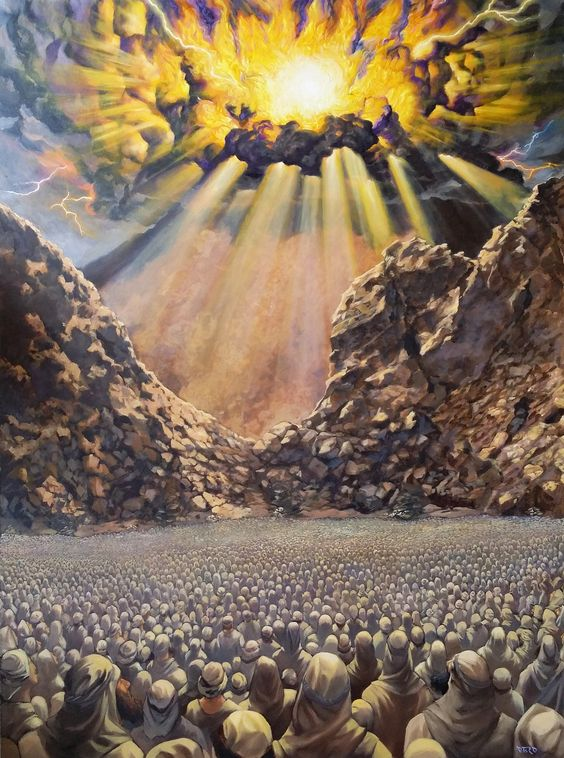
However, the past is not the only direction in time Zichron Teruah points to. If we consider the purpose of trumpet blasts being used in the forty-ninth year to consecrate the upcoming fiftieth year, we can see that Zichron Teruah ambiguously alludes and anticipates the appointed time where freedom is proclaimed, and the people return to their inheritance (i.e. their property, and their people).
Despite their purpose appearing unclear at times, God’s appointments (môʿēḏim) and holy days (holidays) are not random. Instead, they are regarded as sacred time intended to create sacred space for celebration among God’s people and encounter the Eternal (i.e. to meet with the Most High).
The transition from Elul 29 5783 to Tishri 1 5784 marks a Sabbath that was quite unique and special. This specific Sabbath served as holy time where we could see both the seven-day stretch and seven-month span coincide; where the archetypal and alternate sequences of seven coalesced.
A pivotal and unique time to turn.
The Image of a Pivot (2)
At a younger age, before baptism and before walking in faith, I remember being offended by the word ‘repent’. I felt quite resentful and resistant to the process of pastors and priests calling the congregation to repent for their sins. Of course, the obvious reason for catching offence from this is due to living in sin, however I believe there was a deeper underlying cause for contempt.
In hindsight and upon reflection, I realise that the word ‘repent’ triggered an image in my mind of being in a lower and submissive position, of being commanded to grovel and obey arbitrary orders at the feet of an oppressive tyrant. In three words, the image I associated with the process of repentance were submission, oppression and condescension. In a word, I felt I was “under the law” (Galatians 5:18). This was the fruit of the confusion, the resentment and the resistance I had towards the word ‘repent’ and the ones who used it. However, upon discovering the Hebrew word for repentance an alternate image was introduced and my perspective on the process changed.
The Hebrew word for repentance is ‘Teshuvah’ which is translated as ‘return’ from the word šûḇ (shoov) meaning ‘turn’. With this understanding a different image and impression comes to mind on the process of penance (Teshuvah). I will illustrate this image with the help of two stories and two songs. The two stories will help illustrate the image of a pivot in this current blog post. The two songs will help illustrate the image of intimacy and idolatry in the following blog post.
The stories:
Disney’s The Lion King
The Parable of the Prodigal Son (Luke 15)
The songs:
Coldplay – Yellow
Ha’Azinu (Listen) / The Song of Moses (Deuteronomy 32)
What I aim to show through using these stories and songs is that the image illustrated in our minds from the words we use – in this case, ‘repentance’ – paints our perception of the world we inhabit and the God we envision. Each story and song referred to serves to reveal an important aspect of repentance as an image of direction rather than an image of oppression; a call from God to return (Teshuvah) rather than a call from God to condescend.
The story of The Lion King:

This story is a secular one with spiritual undertones and implications.
After being exiled for years following his father’s death, Simba encounters the spirit of his deceased father Mufasa with the help of family friend and spiritual guide Rafiki. This encounter with the king of Pride Rock’s ghost was facilitated and initiated by Rafiki helping Simba to realise that his father’s spirit lives in and carries on through him. Only after this realisation came the cloudy revelation of Mufasa’s ghost giving Simba the chance to speak with his father face-to-face.
Despite the words of Simba’s uncle Scar resounding in and afflicting his mind like a plague, telling him to “run away and never return” to Pride Rock like a fugitive, the Spirit of Mufasa calls Simba in the opposite direction telling him to “remember who you are” and take your rightful place as king.
After reflection-time with Rafiki, Simba finally comes to his senses and decides to return to Pride Rock to take his rightful place in the Circle of Life as king and restores life to the Pride Lands.

During my childhood, the Lion King was on loop and the image illustrated here is one that is imprinted and ingrained on my soul and in my spirit. So much so that even as an adult, I cannot go a single watch without shedding tears at three different points where three different phrases are spoken:
1 – ‘Look at the stars’
2 – ‘Remember who you are’
3 – ‘It is time’
Each of these checkpoints in the story helps to paint the picture of repentance and the significance of return (Teshuvah).
Throughout the years, I’ve met many people who love this story in a similar way despite their difference in age, sex, gender, race, religion, and orientation. As I have reached adulthood I can finally see why the story resonates with so many people: this story speaks to the spirit of humanity because the human spirit yearns to return.
This human yearning to return is illustrated even more explicitly in the second story.
The Parable of the Prodigal Son:
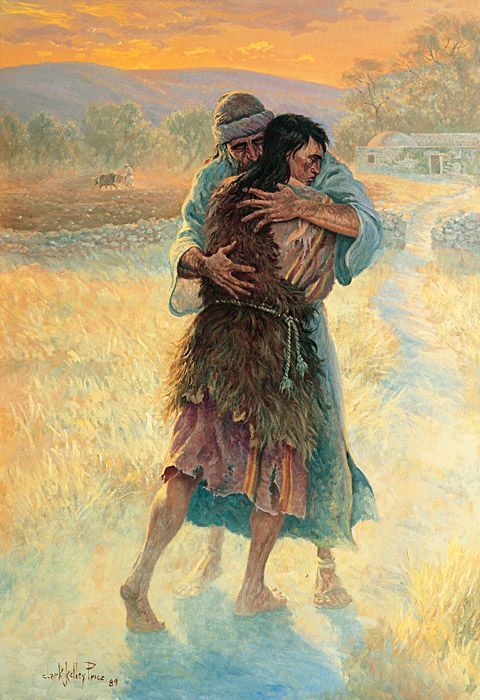
This second story is a spiritual one that can speak to the secular world on the radical love of God. It is the third parable of repentance spoken by Jesus in Luke 15.
“[Jesus] also said: A man had two sons. The younger of them said to his father, ‘Father, give me the share of the estate I have coming to me.’ So he distributed the assets to them. Not many days later, the younger son gathered together all he had and travelled to a distant country, where he squandered his estate in foolish living. After he had spent everything, a severe famine struck that country and he had nothing. … When he came to his senses, he said, ‘How many of my father’s hired workers have more than enough food and here I am dying of hunger! I’ll get up, go to my father, and say to him, ‘Father, I have sinned against heaven and in your sight. I’m no longer worthy to be called your son. Make me like one of your hired workers.’ So he got up and went to his father. But while the son was still a long way off, his father saw him and was filled with compassion. He ran, threw his arms around his neck, and kissed him. The son said to him, ‘Father, I have sinned against heaven and in your sight. I’m no longer worthy to be called your son.’
But the father told his servants, ‘Quick! Bring out the best robe and put it on him; put a ring on his finger and sandals on his feet. Then bring the fattened calf and slaughter it, and let’s celebrate with a feast, because this son of mine was dead and is alive again; he was lost and is found! So they began to celebrate.’”
Luke 15:11 – 24 (CSB)
What these stories have in common, the similarity despite their differences, is the image of the main character coming to their senses and redirecting themselves back to where they came from. The main character in each of these stories serves as an image of a pivot: an image of an individual who turns away, comes to their senses, and turns back to their father.
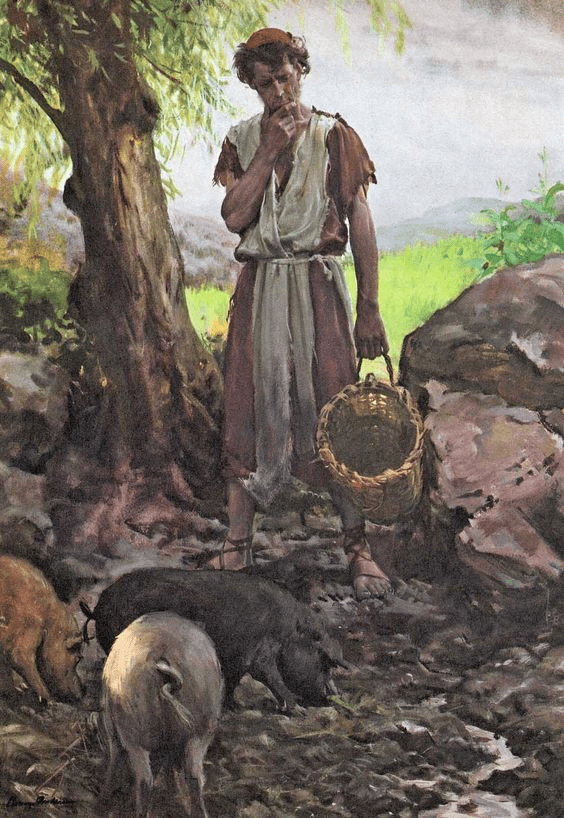
When we couple these stories together with the Ten Days of Teshuvah, we can see repentance in a new light. Instead of an image of groveling, Teshuvah serves as an image of a pivot, an image of turning, an image of remembering and returning to your rightful place.
(To be continued …)
Bibliography
(Anon.) 2017. The Holy Bible, Christian Standard Bible. Nashville, Tennessee. Holman Bible Publishers.
(Ed.) Agnon, S.Y. 1948. Daws of Awe: a Treasury of Jewish Wisdom for Reflection, Repentance, and Renewal on the High Holy Days. New York. Schocken Books Inc.
Booker, R. 2016. Celebrating Jesus in the Biblical Feasts. Shippensburg, Pennsylvania. Destiny Image Publishers, Inc.
(Anon) Meeting at Mount Sinai. Accessible at: <https://www.pinterest.co.uk/pin/307933693266621483/>
(Anon.) Prodigal Son Realises. Accessible at: <https://pin.it/7jcWHWp>
(Anon.) Prodigal Son Returns. Accessible at: <https://pin.it/WvD1orN>
Blue Letter Bible. Leviticus 23. Accessible at: <https://www.blueletterbible.org/kjv/lev/23/1/t_conc_113024>
Kuzeyyiremm. Untitled. Accessible at: <https://pin.it/2NhMwiI>
St. Laurent, M. Prince of the Pride. Accessible at: <https://pin.it/Hvj6aXF>
Discography
Travis – Turn
Beck – Everybody’s Gotta Learn Sometime
Trevor Hall – The Old Story
Macklemore & Ryan Lewis – Starting Over
J Cole, James Fauntleroy – Born Sinner
Lebo M. & Chorus – He Lives in You
Michael Jackson – Man in the Mirror
Beyonce – Find Your Way Back
Common, PJ – Don’t Forget Who You Are
Cam Clarke, Charity Sanoy & Ladysmith Black Mambazo – We Are One
Carmen Twillie, Lebo M. – Circle of Life

 Sy 'Adamah #SageSpeaks