
To be read or listened to during the month of Elul in approach to the Day of Atonement (Tishrei 10, 5784 / 25th September 2023) – https://podcasters.spotify.com/pod/show/sy-adamah
A Journey to the Seventh
The month of Av has passed, the month of Elul has begun.
On the Hebrew calendar, the month of Av [the fifth month] has as its centrepiece the date known as Tisha B’Av [the Ninth of Av]. In Jewish culture, this date has become a time set apart to lament and grieve the tragedies experienced and endured in Hebrew history. In the history of the Hebrew people, there are two notable tragedies which occur either on or around this date:
The first notable tragedy involves the desolation of Solomon’s Temple (circa 586BC).
The desolation of the Solomon’s Temple (i.e. the First Temple) followed the Babylonian siege of Jerusalem and preceded the exile of the Jewish people into Babylon. This series of unfortunate events is documented in Chapter 52 of the Book of Jeremiah.
“Now in the fifth month [Av], on the tenth day of the month (which was the nineteenth year of King Nebuchadnezzer king of Babylon), Nebuzaradan, the captain of the guard, who served the king of Babylon, came to Jerusalem.
He burned the house of the LORD and the king’s house; all the houses of Jerusalem, that is, all the houses of the great he burned with fire.
And all the army of the Chaldeans who were with the captain of the guard broke down all the walls of Jerusalem all around.
Then Nebuzaradan the captain of the guard carried away captive some of the poor people, the rest of the people who remained in the city, the defectors who had deserted to the king of Babylon, and the rest of the craftsmen.”
– Jeremiah 52:12- 15 (NKJV)
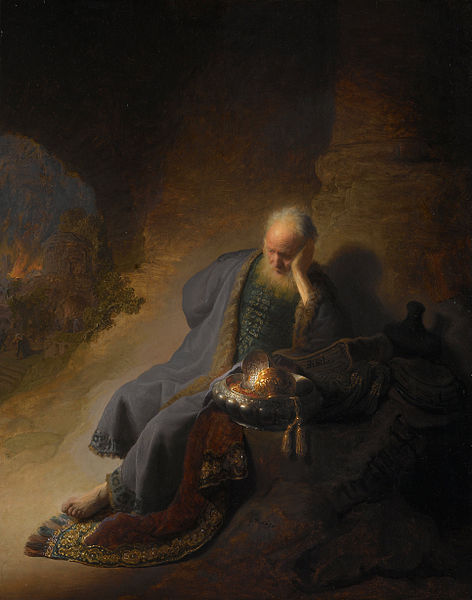
The second notable tragedy involves the desolation of the Second Temple (circa 70AD).
This second desolation followed the commission of King Cyrus for the Jewish exiles to return and rebuild the Temple at Jerusalem.
“In the first year of King Cyrus of Persia, in order to fulfil the word of the LORD spoken through Jeremiah, the LORD roused the spirit of King Cyrus to issue a proclamation throughout his entire kingdom and to put it in writing:
This is what King Cyrus of Persia says: ‘The LORD, the God of the heavens, has given me all the kingdoms of the earth and has appointed me to build him a house at Jerusalem in Judah. Any of his people among you, may his God be with him and may he go to Jerusalem in Judah and build the house of the LORD, the God of Israel, the God who is in Jerusalem. Let every survivor, wherever he resides, be assisted by the men of that region with silver, gold, goods, and livestock, along with a freewill offering for the house of God in Jerusalem.’
So the family heads of Judah and Benjamin, along with priests and Levites – everyone whose spirit God had roused – prepared to go up and rebuild the LORD’s house in Jerusalem.”
– Ezra 1:1-5 (CSB)
This tragedy was also preceded by Jesus’s prophecy of desolation documented in the Gospel of Matthew.
“As Jesus left and was going out of the temple, his disciples came up and called his attention to its buildings. He replied to them, ‘Do you see all these things? Truly I tell you, not one stone will be left here on another that will not be thrown down.’ ”
Matthew 24:1-2 (CSB)
Also on the Hebrew calendar, the forty days spanning from the beginning of Elul [the sixth month] to the tenth day of Tishrei [the seventh month] is a time dedicated to teshuvah – to turn to God; to repent from sin. This time to turn to God and repent from sin is done in remembrance of Moses’ second ascent up Mount Sinai for forty days and forty nights in aim to atone for the sins of the people of Israel.
The first set of forty days and nights was an ascent to receive the tablets of testimony also known as the tablets of witness.
“The LORD said to Moses, ‘Come up to me on the mountain and stay there so that I may give you the stone tablets with the law and commandments I have written for their instruction.’
So Moses arose with his assistant Joshua and went up the mountain of God. He told the elders, ‘Wait here for us until we return to you. Aaron and Hur are here with you. Whoever has a dispute should go to them.
When Moses went up the mountain, the cloud covered it. The glory of the LORD settled on Mount Sinai and the cloud covered it for six days. On the seventh day he called to Moses from the cloud. The appearance of the LORD’s glory to the Israelites was like a consuming fire on the mountaintop. Moses entered the cloud as he went up the mountain, and he remained on the mountain forty days and forty nights.”
– Exodus 24:12-18 (CSB)
These two tablets were written and recorded with the finger of God himself to testify and bear witness to the free choice of the Israelites themselves. This choice involved turning away from the idols of Egypt and, in the process, turning towards the God of their fathers. The substance and evidence of this choice being the people’s continuing commitment to keep the Torah: the commandments which proceeded from the mouth of God as Ten Words of instruction.
The second set of forty days and nights on the mountain was an ascent to receive atonement and reconciliation with God.
“Moses saw that the people were out of control for Aaron had let them get out of control, making them a laughingstock to their enemies.
[…]
The following day Moses said to the people, ‘You have committed a grave sin. Now I will go up to the LORD; perhaps I will be able to atone for your sin.’
So Moses returned to the LORD and said, ‘Oh, these people have committed a grave sin; they have made a god of gold for themselves. Now if you would only forgive their sin. But if not, please erase me from the book you have written.’ ”
– Exodus 32:25 – 31 (CSB)
After breaking the first commandment, Moses sought divine favour and forgiveness through a process of penance. This is because the people turned away from God and towards a god of gold, an idol of their own making and a work of their own hands.
With all this context in mind, we can see the transition from the fifth month [Av], through the sixth [Elul] and into the seventh month [Tishrei] as a journey starting from lament & grief, going through a period of penance which finally arrives at a state of rest in God.
D’Evils
In my last blog post Tisha B’Av : Vanity, Futility & Faith in God (Pt.2) , we covered the fact that the human tendency to turn away from God and towards sin introduces the evil of vanity and futility into our lives making our very existence seem absurd. With this, we could be tempted to think the following:
- If we were to simply to turn towards God and away from sin (teshuvah), then there would be no evil & suffering.
- The evil that we suffer with in this life is completely self-inflicted, self-induced or self-caused.
Unfortunately, this is false and the Bible testifies to the fact that this false. Of course, our own choices play a role in the broken world we live in (e.g. social and moral evils), but it is not necessarily the case that all evil suffered (viz. natural evil) is because we have sinned.
“As he was passing by, he saw a man blind from birth. His disciples asked him, ‘Rabbi, who sinned, this man or his parents, that he was born blind?’
‘Neither this man nor his parents sinned,’ Jesus answered. ‘This came about so that God’s works might be displayed in him. We must do the works of him who sent me while it is day. Night is coming when no one can work. As long as I am in the world, I am the light of the world.’”
– John 9:1-5 (CSB)
The theme of Tisha B’Av and the emphasis on teshuvah during the month of Elul can give the impression that teshuvah is all that is required to solve the problem of evil. However, there are two books in the Bible which have drawn my attention and highlighted that this issue is not so simple. These two books are:
The Book of Lamentations & The Book of Job
By living with these books in the past few weeks since Tisha B’Av I have come to notice their similarities and their differences.
Their similarities:
- Both wrestle with the problem of evil & suffering.
- Both accept that God is the source of both the good we enjoy and evil we encounter, experience & endure.
“Who is there who speaks and it happens, unless the Lord has ordained it?
Do not both adversity [evil & suffering] and good come from the mouth of the Most High?
Why should any living person complain, any man, because of the punishment for his sins?
Let us examine and probe our ways, and turn back to the LORD.
Let us lift up our hearts and our hands to God in heaven.”
Lamentations 3:37 – 42 (CSB)
(N.B. The Book of Lamentations accepts God is the source of evil himself but this evil is self-inflicted, self-induced and self-caused by the sinful acts of Israel & Judah themselves . Therefore teshuvah – turning to God and turning away from sin – is seen as the cure for the Israel & Judah’s suffering.)
“Then the LORD said to Satan, ‘Have you considered my servant Job? No one else on earth is like him, a man of perfect integrity, who fears God and turns away from evil. He still retains his integrity, even though you incited me against him, to destroy him for no good reason.’
[…]
[Job’s] wife said to him, ‘Are you still holding on to your integrity? Curse God and die!’
‘You speak as a foolish woman speaks,’ he told her. ‘Should we accept only good and not adversity [evil & suffering]? Throughout all this Job did not sin in what he said.”
Job 2: 3 – 10 (CSB)
(N.B. The Book of Job accepts God himself is the source of evil but God’s interaction with Satan implies that teshuvah cannot be considered as the cure for Job’s situation. This is because Job is already of “perfect integrity”: Job is already faithful to God; Job is already turned towards God and away from sin) .
Their differences:
- Both books grapple with different angles or aspects of evil & suffering.
- The first book (Lamentations) grapples with the problem of moral evil suggesting the cure for Israel & Judah’s situation to be teshuvah (repentance: turning back to God and away from sin)
- The second book (Job) grapples with the problem of natural evil that is not self-inflicted, self-induced or self-caused, and so the cure for Job’s situation is not as obvious.
In my last post, I feel as though I covered only half of the story of suffering. The half which covers and can be attributed to an individual’s choice (viz. moral evil), where the cure to this suffering is considered in the lament of Judah.
In this post, I wish to cover the other half of the story of suffering. The half which cannot be attributed to an individual’s choice (viz. natural evil), where the cure to this suffering is embodied in the life of Job.
Stories of Undue Suffering
In my own life, I have returned to the Book of Job several times. Next to the Book of Genesis & Exodus, this book was one of the most accessible to me from the Hebrew scriptures. I cannot remember clearly how I was introduced to it, but I do remember my first encounter with the name Job. My first encounter with the name came from a childhood neighbour’s son being called Job. This seems like a minor detail and an insignificant memory but when you think of it, Job is a very uncommon name – rare, in fact – and understandably so due to the meaning and story behind it. Job means “hated” or “persecuted” and Job’s life story involves being in the crosshairs of a conversation between God and Satan.
“Then the LORD said to Satan, ‘Have you considered my servant Job? No one else on earth is like him a man of perfect integrity, who fears God and turns away from evil.’
Satan answered the LORD, ‘Does Job fear God for nothing? Haven’t you placed a hedge around him, his household, and everything he owns? You have blessed the work of his hands, and his possessions have increased in the land. But stretch out your hand and strike everything he owns, and he will surely curse you to your face.’
‘Very well,’ the LORD told Satan, ‘everything he owns is in your power. However, do not lay a hand on Job himself.’ So Satan left the LORD’s presence.”
Job 1: 6-11 (CSB)
In essence, the Book of Job is a story of undue suffering caused by a wager between Satan and God where evil is permitted to fall on Job despite – and even because of – his integrity, his faithfulness to God.
This makes us uncomfortable because the story makes us wonder whether the evil & suffering in our own lives and those we love are a result of the same conversation and wager between God and Satan.
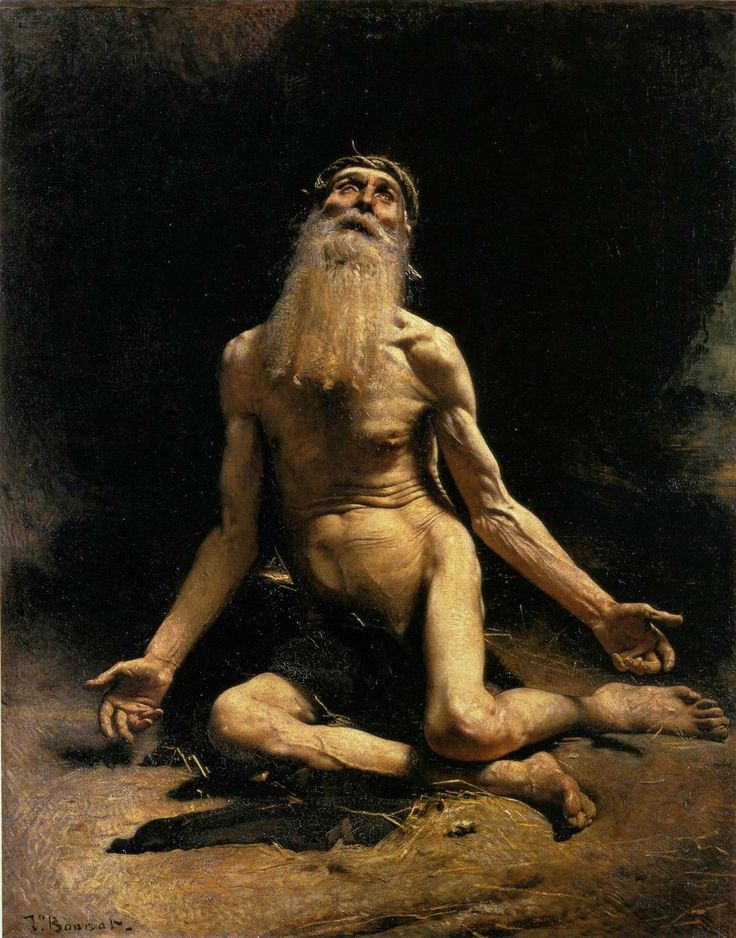
This does not seem fair but despite the injustice, I have returned to the story of Job several times throughout the entirety of my life for several reasons. I could mention curiosity as one and coursework as another but in sum I gravitate to stories of undue suffering.
To name a few examples from both the media & entertainment:
A Child Called ‘It’ by Dave Pelzer
The Passion of the Christ by Mel Gibson
The Pursuit of Happyness with Will Smith
Cast Away with Tom Hanks
The Shawshank Redemption with Morgan Freeman
The Book of Soul by Ab-Soul
Also, at each stage of my life, I have come across countless stories of undue suffering detailed by family, friends and acquaintances.
To name a few examples from real life:
My sister contracting polio disease in Ghana
My mother and sister’s experience with domestic abuse in the UK
My friends’ and peers’ stories of rape, miscarriage, domestic abuse, father absence, prosecution
Animal cruelty
I cannot explain why I gravitate to these stories but I can say that it is not sadistic but rather sympathetic. There is something real, something piercing and something potent about these stories. This something moves me to tears, compels me to compassion and challenges me to change.
“As soon as Mary came to where Jesus was and saw him, she fell at his feet and told him, ‘Lord, if you had been here my brother wouldn’t have died!
When Jesus saw her crying, and the Jews who had come with her crying, he was deeply moved in his spirit and troubled.
‘Where have you put him?’ he asked.
‘Lord,’ they told him, ‘come and see.’
Jesus wept.
So the Jews said, ‘See how he loved him! But some of them said, ‘Couldn’t he who opened the blind man’s eyes also have kept this man from dying?’”
John 11:32-36 (CSB)
Although I cannot say that I can relate to Job’s story in the sense of experiencing the specific events, I can honestly say that I have lived with it through my own trials, temptations and waves of despair throughout the years.
Understandably and naturally, we would want to escape and avoid evil & suffering by any means – even reading it. However, in anticipation for Av 9 [Tisha B’Av], the Jewish community are ushered in the opposite direction to what is understandable or natural by reading both the Books of Lamentations and Job. Although Av 9 is technically not sacred or appointed time (Moedim) according to Leviticus 23, it does, however, have a biblical basis (Jeremiah 52). Because of this, the Ninth of Av should be time set apart on the calendar to contemplate our human condition rife with stories of undue suffering.
Lamentations & Job
The similarity and linchpin between the books of Lamentations and Job is the acceptance of the idea that God is the source of both the good we enjoy and the evil we encounter, experience & endure:
“Who is he that saith, and it cometh to pass, when the Lord commandeth it not? Out of the mouth of the most High proceedeth not evil and good?”
Lamentations 3:37 – 38 (KJV)
“But [Job] said unto [his wife], ‘Thou speakest as one of the foolish women speaketh. What? Shall we receive good at the hand of God, and shall we not receive evil? In all this did not Job sin with his lips.”
Job 2: 10 (KJV)
However, this seems to contradict our idea of God’s goodness especially when we bring James into the conversation.
“No one undergoing a trial should say, ‘I am being tempted by God,’ since God is not tempted by evil, and he himself doesn’t tempt anyone. But each person is tempted when he is drawn away and enticed by his own evil desire. Then after desire has conceived, it gives birth to sin, and when sin is fully grown, it gives birth to death.
Don’t be deceived, my dear brothers and sisters. Every good and perfect gift is from above, coming down from the Father of lights, who does not change like shifting shadows. By his own choice, he gave us birth by the word of truth so that we would be a kind of firstfruits of his creatures.”
James 1: 13-18 (CSB)
When we bring James into the conversation with the lament of Judah and the life of Job we are left with questions:
How do we make sense of this?
How is it possible to marry both the idea in the Letter of James with the Books of Lamentations and Job?
Why is there a contradiction between the ideas in the texts if the Bible is the perfect and inspired Word of God?
These questions are indented with two Hebrew interrogatives:
1. êḵ … ‘êḵa
2. mâ … meh
The first interrogative = ‘How?’
The second interrogative = ‘Why?’ or ‘What?’
In the Hebrew scriptures, there is a method and practice of naming and titling books and passages of the Torah after a definitive phrase or key word that initiates and indents the book or passage. For example:
Genesis = B’resheet / (In the beginning)
From rē’šîṯ in Genesis 1:1
Exodus ~ Sh’mot (Names)
From šēm in Exodus 1:1
Leviticus ~ Vayikra (Adonai called)
From qārā’ in Leviticus 1:1
Numbers ~ B’midbar (In the wilderness)
From miḏbār in Numbers 1:1
Deuteronomy ~ D’varim (Words)
From dāḇār in Deuteronomy 1:1
Why do I mention this? What is the connection?
The Book of Lamentations = The Book of ‘êḵa (How)
From ‘êḵ in Lamentations 1:1
“How doth the city sit solitary, that was full of people! How is she become as a widow! She that was great among the nations, and princess among the provinces, how is she become tributary!”
Lamentations 1:1 (KJV)
The Book of Lamentations asks and answers the first interrogative: ‘êḵa (How?)
How can this be? How is this possible? How has this happened?
The answer: Sin (turning away from God)
“Her adversaries are the chief, her enemies prosper; for the LORD hath afflicted her for the multitude of her transgressions: her children are gone into captivity before the enemy.
…
Jerusalem hath grievously sinned; therefore she is removed: all that honoured her despise her, because they have seen her nakedness: yea, she sigheth, and turneth backward.”
Lamentations 1:5,8 (KJV)
The cure: Teshuvah (turning back to God)
From Job’s first lament, I have personally given the Book of Job an alternate name and title:
The Book of Job ~ The Book of mâ (Why?)
“Why died I not from the womb? Why did I not give up the ghost when I came out of the belly? Why did the knees prevent me? Or why the breasts that I should suck? For now should I have lain still and been quiet, I should have slept: then had I been at rest,
…
Why is light given to a man whose way is hid, and whom God hath hedged in?
…
For the thing which I greatly feared is come upon me, and that which I was afraid is come unto me.
I was not in safety, neither had I rest, neither was I quiet; yet trouble came.”
Job: 3:11-26 (KJV)
The Book of Job asks and attempts to answer the second interrogative: mâ (What or Why?)
What is this? What is the reason? Why is this happening?
The answer: ?
In the eyes of Job’s friends, Job’s afflictions are not random coincidences but biblically-backed signs of sin.
“So went Satan forth from the presence of the LORD, and smote Job with sore boils from the sole of his foot unto his crown. And he took him a potsherd to scrape himself withal; and he sat down among the ashes.”
Job 2: 7-8 (KJV)
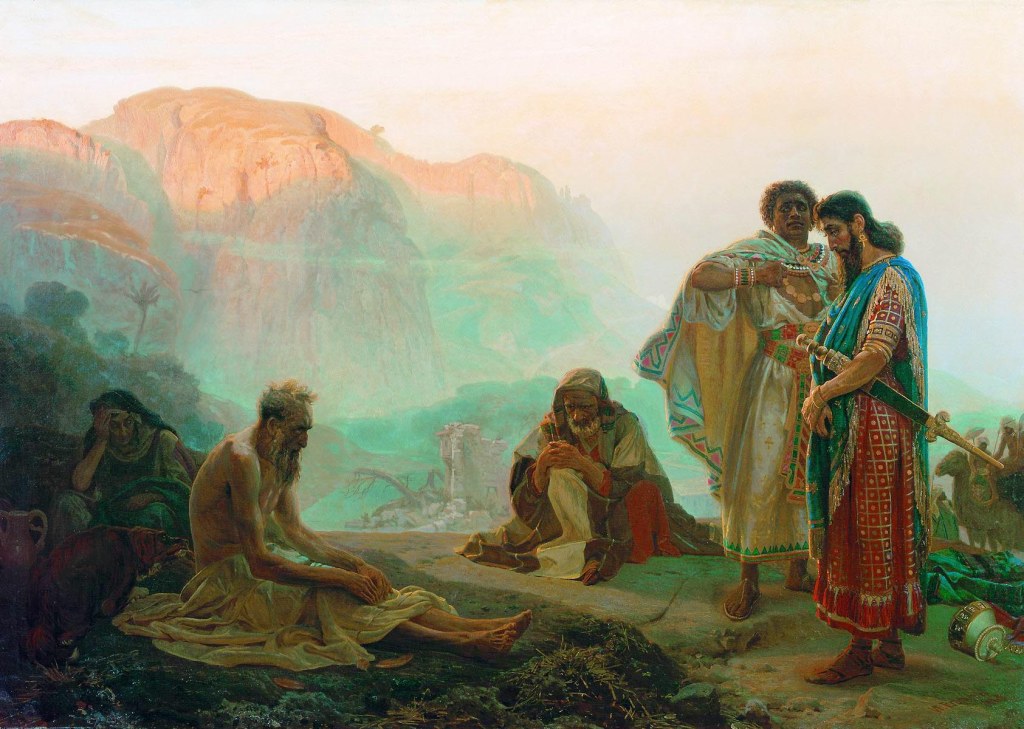
Boils and blisters are a plague of Egypt in the Book of Exodus (Exodus 9:8-12) and a sign of disobedience in Book of Deuteronomy (Deuteronomy 28:15-22, 27-29, 33-35).
With this in mind, it is only understandable and natural that Job’s friends would guess his guilt and recommend teshuvah. However, from our perspective (and God’s eye view) we know that Job is not sinful and that his suffering is not due to disobedience.
Because we do not have a reason … the answer remains a question:
Why?
Because we do not have an answer … the cure remains a mystery:
?
Despair & Hope
“Then Job answered:
If only my grief could be weighed and my devastation placed with it on the scales. For then it would outweigh the sand of the seas! That is why my words are rash. Surely the arrows of the Almighty have pierced me; my spirit drinks their poison. God’s terrors are arrayed against me. …
…
If only my request would be granted and God would provide what I hope for: that he would decide to crush me, to unleash his power and cut me off! It would still bring me comfort, and I would leap for joy in unrelenting pain that I have not denied the words of the Holy One.
What strength do I have, that I should continue to hope? What is my future, that I should be patient? … Since I cannot help myself, the hope for success has been banished from me.”
Job 6: 1- 13 (CSB)
Job is faithful to God and Job wishes to remain so to the point of death. Job is brought to breaking point where he is tempted to give up hope and would wish to die before denying God’s promises.
According to Christian Existentialist philosopher Gabriel Marcel, Job’s situation is exactly the type of scenario we need to find ourselves in for us to have true and substantial hope. In his book Homo Viator: An Introduction to the Metaphysic of Hope, Marcel contrasts true and substantial hope with superficial hope (viz. wishful thinking and optimism). The former requires that the individual finds themselves somewhat imprisoned and almost overwhelmed by an ordeal of evil & suffering to the point of being tempted to despair.
“To convince ourselves of this it is enough to observe that we are quite unable to tell before an ordeal what that ordeal will do to us and what resources we shall find we possess with which to face it.
The truth is that there can strictly speaking be no hope except when the temptation to despair exists. Hope is the act by which this temptation is actively or victoriously overcome.”
Homo Viator: A Metaphysic of Hope by Gabriel Marcel, p.36
The temptation to despair can be summarised as an individual being enticed to submit to the situation they find themselves in and somewhat imprisoned by. On the other hand, the act of hope can be envisioned as wrestling with and overcoming the temptation to give into the ordeal of evil & suffering an individual finds themselves in.

When we bring Gabriel Marcel into the conversation, we see that Job’s faithfulness had to be tried and tested by giving him the temptation to give up hope in God. This temptation to despair would involve being attracted or enticed to submit to the situation of life he found himself in rather than trusting in the source of life he came from. Job’s faithfulness was tried and tested by three temptations – three waves of despair – that needed to be actively and victoriously overcome:
The first temptation: loss of possessions
Job 1:13 – 19
Job’s response: “Naked I came, naked I go”
Job 1:20 –22
The second temptation: loss of health & well-being
Job 2: 3-8
Job’s response: “I will accept both the goods and the evils”
Job 2:9-10
The third temptation: loss of social support and potentially life itself
Job 19:13-22
Job’s response: “My Redeemer lives! I will see Him.”
Job 19: 23-27
Job is a real, piercing and powerful story of undue suffering and, as members of this hurtful earth, we are all familiar with the language of pain & strife even if we have not personally gone through it. As human beings still holding on for dear life, we all recognise the resource we resort to when we find ourselves tempted to despair. On some deeper level we all recognise that enduring hope & faith in God is the resource that remains when we find ourselves in a situation where all else fails.
“Now faith is the reality of what is hoped for, the proof of what is not seen. For by it our ancestors won God’s approval.”
Hebrews 11:1-2 (CSB)
The Book of Job ~ The Book of Mâ (Why?)
What is this? What is the reason? Why is this happening?
The answer: An ordeal of hope & faith in God
The cure: Keep hope & faith in God alive (… no matter what)
Holes in your Hands
… We can still ask what and why.
What is God’s need for this? Why do we need to go through evil like this? Why can’t we avoid suffering like this?
Faith in God means that we are prone to be pierced:
“Since it was the preparation day, the Jews did not want the bodies to remain on the cross on the Sabbath (for that Sabbath was a special day). They requested that Pilate have the men’s legs broken and that their bodies be taken away. So the soldiers came and broke the legs of the first man and of the other one who had been crucified with him. When they came to Jesus, they did not break his legs since they saw that he was already dead. But one of the soldiers pierced his side with a spear, and at once blood and water came out. … For these things happened so that the Scripture would be fulfilled: Not one of his bones will be broken. Also, another Scripture says: They will look at the one they pierced.”
John 19: 31-37 (CSB)
Faith in God means that we are prone to suffer:
“He was despised and rejected by men, a man of suffering who knew what sickness was. He was like someone people turned away from; he was despised, and we didn’t value him.
Yet he himself bore our sicknesses, and he carried our pains; but we in turn regarded him stricken, struck down by God, and afflicted. But he was pierced because of our rebellion, crushed because of our iniquities; punishment for our peace was on him, and we are healed by his wounds.”
Isaiah 53: 3-6 (CSB)
Faith in God means that we are prone to temptation:
“My God, my God, why have you abandoned me? Why are you so far from my deliverance and from my words of groaning? My God, I cry by day, but you do not answer, by night, yet I have no rest.”
Psalm 22: 1-2 (CSB)
The temptation to despair and give up hope & faith in God. Do not give up, keep hope & faith alive.
Why?
Your piercings and your pain; your scars and your sufferings; the holes in your hands … all are necessary for God’s work to be displayed in you.
‘” ‘Neither this man nor his parents sinned,’ Jesus answered. ‘This came about so that God’s works might be displayed in him..’ ”
John 9:3 (CSB)
They say, ‘time heals all wounds’ …
But some wounds are meant to be etched into our flesh.
Some wounds are meant to remain as reminders.
Some wounds are meant to remain and remind us – and the world – who we truly are:
“But Thomas (called ‘Twin’), one of the Twelve, was not with them when Jesus came. So the other disciples were telling him, ‘We’ve seen the Lord!’
But he said to them, ‘If I don’t see the mark of the nails in his hands, put my finger into the mark of the nails, and put my hand into his side, I will never believe.’
A week later his disciples were indoors again, and Thomas was with them. Even though the doors were locked, Jesus came and stood among them and said, ‘Peace be with you.’
Then he said to Thomas, Put your finger here and look at my hands. Reach out your hand and put it into my side. Don’t be faithless, but believe.’”
John 20: 24 – 29 (CSB)
Understandably and naturally, Thomas wanted tangible proof of the living God through the risen Christ. Allow your wounds (i.e. your struggle and strife, your suffering and scars, your pain and piercings) to be proof and testify to who you are, to who we are.
We are:
Children of God & The Body of Christ
The Passion of the Christ (2004) – Ending Scene
Bibliography
(Anon.). The Holy Bible, King James Version. Harper Collins Publishers.
(Anon.) 1982. The Holy Bible, New King James Version. Nashville, Tennessee: Thomas Nelson, Inc.
(Anon.) 2017. The Holy Bible, Christian Standard Bible. Nashville, Tennessee. Holman Bible Publishers.
(Ed.) Agnon, S.Y. 1948. Daws of Awe: a Treasury of Jewish Wisdom for Reflection, Repentance, and Renewal on the High Holy Days. New York. Schocken Books Inc.
Marcel, G. 1951. Homo Viator: Introduction to a Metaphysic of Hope. Chicago. Henry Renery Company.
Stern, David H. 1998 and 2016. Complete Jewish Bible. Clarksville, Maryland USA. Messianic Jewish Publishers & Resources.
Blue Letter Bible. Job 3. Available at: <https://www.blueletterbible.org/kjv/job/3/1/t_conc_439011>
Blue Letter Bible. Lamentations 1. Available at: <https://www.blueletterbible.org/kjv/lam/1/1/t_conc_798001>
Bonnat, Léon. Job. Public Domain. – <http://www.histoire-image.com> Available at:<https://commons.wikimedia.org/w/index.php?curid=2188483>
Etz- Hayim – Tree of Life Publishing. The Jewish and Christian Liturgical Calendar. Available at: <https://www.etz-hayim.com/calendars/>
Harmenszoon van Rijn, Rembrandt. Jeremiah Lamenting the Destruction of Jerusalem. Google Arts & Culture, Public Domain, Available at: <https://commons.wikimedia.org/w/index.php?curid=13410464>
Marcel, G. Homo Viator: An Introduction to a Metaphysic of Hope. Goodreads. Available at: <https://www.goodreads.com/book/show/5320482-homo-viator>
Repin, Ilya. Job and His Friends. Public Domain. Available at: <http://lj.rossia.org/users/john_petrov/854534.html> , <https://commons.wikimedia.org/w/index.php?curid=2538610>

 Sy 'Adamah #SageSpeaks